
Land Invaders
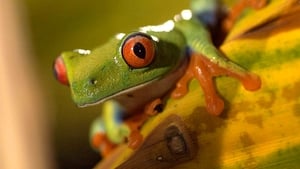
The second programme explores the world of amphibians, of which there are some 6,000 known species. Attenborough visits Australia to illustrate how they became the first back-boned creatures to colonise land: the lungfish, which is capable of breathing air, and whose ancestors became the first amphibians. The largest of them is the Japanese giant salamander and two are shown wrestling for territory. In North America, the marbled salamander spends most of its life on land, yet is still able to retain the necessary moisture in its skin through the damp leaf litter. A female caecilian is filmed with her young, whose rapid growth is discovered to be the result of eating their mother's skin — re-grown for them every three days. The most successful amphibians are frogs and toads. Their calls are most active during the breeding season: females are impressed by both volume and frequency. However, gestures are sometimes needed and the poisonous Panamanian golden frog uses a conspicuous form of 'semaphore'. Most other frogs rely on camouflage and the South American red-eyed tree frog is an example. An African bullfrog is shown defending its exposed tadpoles by digging a canal for them. Meanwhile, the male marsupial frog keeps its young moist by carrying them in its skin pouches. Under the Skin examines the filming of the last population of Panamanian golden frogs, which is threatened by a fungal disease.